Christmas Lights on Palm Trees: What Homeowners Should Know
What homeowners should know before installing Christmas lights on palm trees, including access, safety, maintenance, weather, and takedown.
What Homeowners Should Know Before Installing Christmas Lights on Palm Trees
TL;DR
- Christmas lights on palm trees can be more involved than they look, especially when the palms are tall or there are several trees across a property.
- Height, access, installation, and securing the lights all affect how much work the project requires.
- Homeowners should also plan for maintenance during the season and takedown afterward, not just the initial installation.
A palm tree can look like one of the simplest things to decorate for Christmas. From the ground, wrapping a strand of lights around the trunk may seem like a straightforward afternoon project.
The reality can be quite different once the palm is tall, difficult to access, or part of a larger property with several trees. Reaching higher sections, handling lights while working at height, securing everything properly, and getting back to the installation if something stops working can add considerably to the project.
And the work does not necessarily end when the lights are turned on. Outdoor lighting may need attention during the holiday season, and eventually everything has to come down and be stored or prepared for the following year.
Before installing Christmas lights on palm trees, it helps to look at the entire seasonal project rather than just the price of the lights themselves.
Palm Trees Are Different From Other Trees
Installing lights on a palm is not quite the same as decorating a small ornamental tree or shrub.
A short tree that can be reached comfortably from the ground presents relatively few access challenges. A mature palm can be a very different project. Its height, narrow trunk, smooth surface, and overall shape can make certain sections more difficult to reach and work on.
The size and location of the palm also matter. A relatively short palm in an open area may be much easier to work on than a tall palm positioned close to a house, pool, driveway, landscaping, or other property features.
Height can affect more than safety. It can also affect how long installation takes and what type of access may be appropriate for the job. The same applies when several palms need to be decorated across a larger property.
This is why there is a significant difference between lighting one accessible palm and planning a complete palm tree lighting display around a large residential property.
Tall Palms Require the Right Equipment
Reaching the upper portions of a tall palm may require appropriate access equipment. Depending on the height, property layout, and conditions, that can include ladders, lifts, or other equipment suited to elevated work.
The important consideration is not simply having a way to get higher. The equipment needs to provide appropriate access for the particular property and allow the installer to work efficiently while handling the lighting materials.
Many homeowners simply do not have this type of equipment available. Even when equipment can be rented for a particular project, arranging for a lift or other access equipment can add time, cost, and logistical challenges.
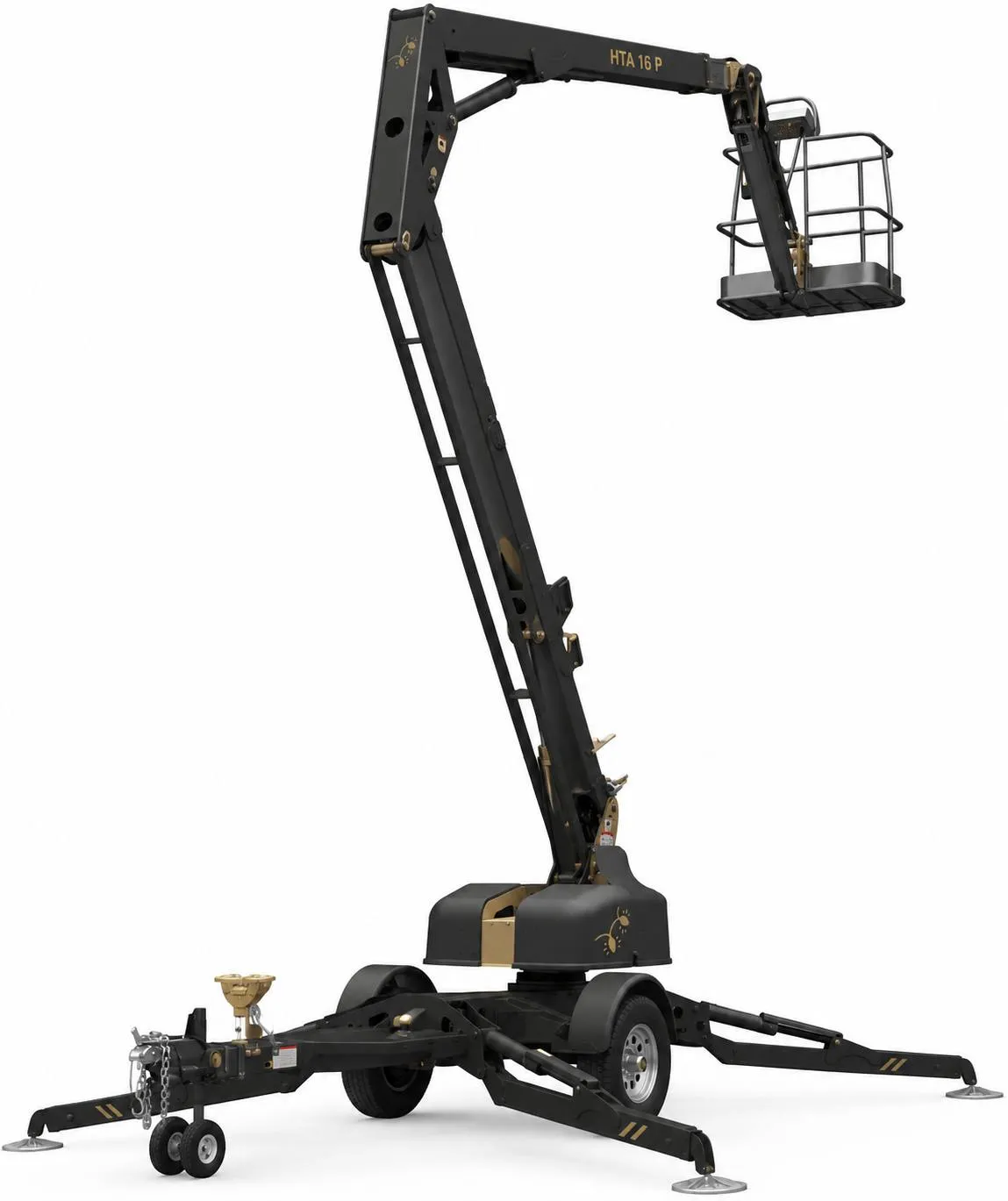
Some lifts require a vehicle with a proper towing hitch and enough towing capacity to move and position the equipment on the property.
Using the appropriate equipment can make a project more manageable and reduce unnecessary risks compared with trying to improvise access.
Working at Height Adds Safety Concerns
Installing Christmas lights on a tall palm is fundamentally different from decorating at ground level.
Maintaining stable access, moving around the property, and reaching different sections of the palm all become part of the job. A lack of experience or appropriate equipment can increase the risk of falls and injuries. That does not mean every palm tree lighting project requires a professional. A relatively short, accessible palm can be very different from a mature palm that requires elevated access.
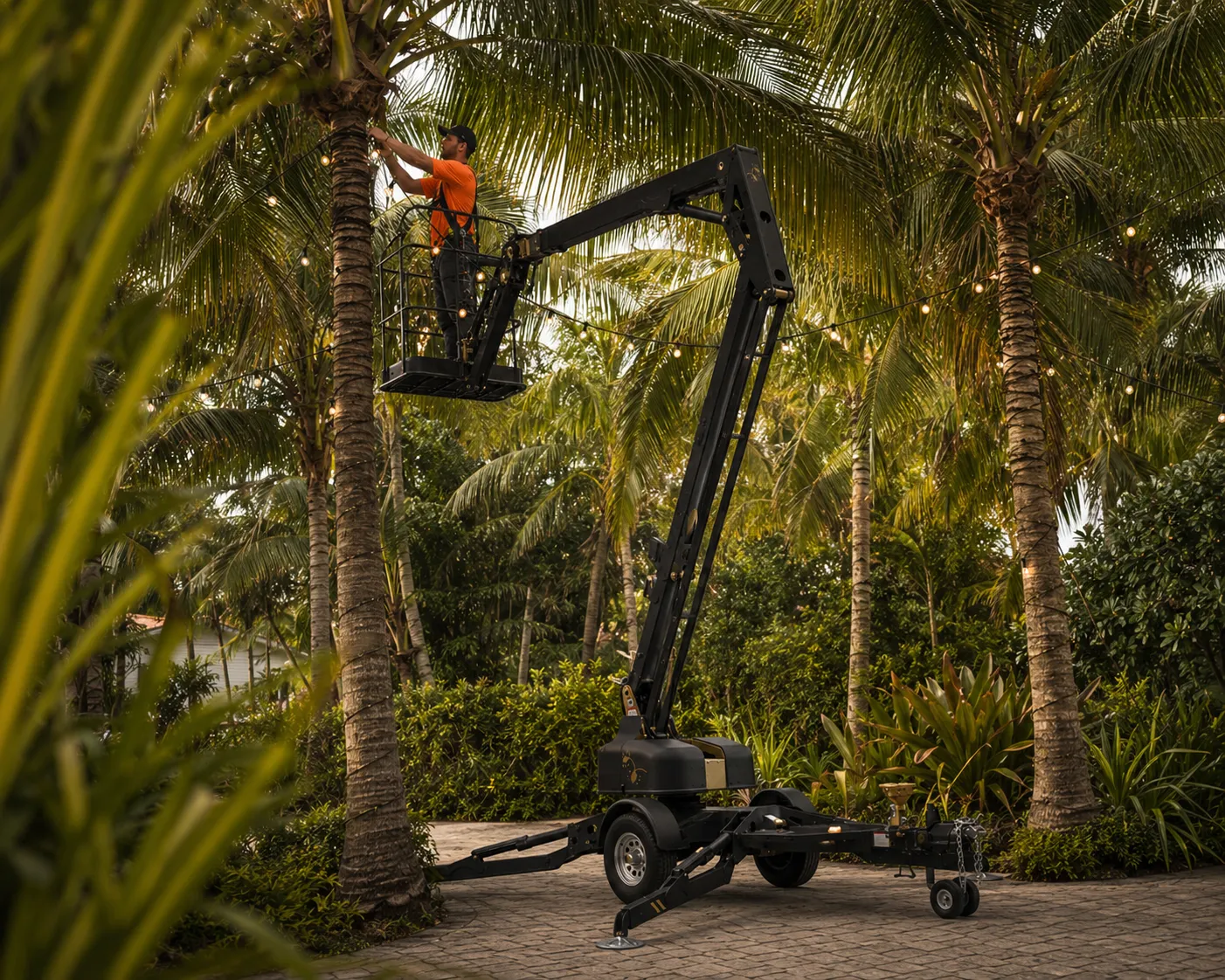
The more height and access challenges a project presents, the more important it becomes to realistically assess whether the homeowner has the experience and appropriate equipment to handle the work safely.
Wrapping a Palm Tree Takes More Time Than It Looks
The amount of work involved in palm tree lighting depends on several factors.
Height and trunk size are obvious considerations, but accessibility, the palm’s location on the property, the number of trees, and the desired density of the lighting can all affect installation time.
Wrapping one accessible palm is one project. Wrapping six, eight, or ten palms spread across a larger property is another.
There may also be differences between individual palms. Some may be easier to access while others may require more time because of their location or height. More trees also mean more lighting material, more connections, and more areas to inspect later if something stops working.
For that reason, homeowners should consider the labor involved rather than looking only at the cost of the lights. What may seem like a simple afternoon project can easily turn into several days of work if the size and scope aren’t considered.
Maintenance During the Season
Putting the lights up is not necessarily the end of the work. Outdoor holiday lighting may require attention during the season, particularly when individual sections become loose or stop working.
Possible issues can include loose lights, failed connections, or a section that no longer illuminates properly. Outdoor materials are also exposed to the elements throughout the season.
In South Florida, rain, wind, humidity, and changing weather conditions can put additional stress on an outdoor lighting installation. The quality of the materials and how the installation was completed can also affect how it performs over time. If you want to explore this topic in more detail, see our guide to how Florida weather can affect outdoor holiday lights.
That does not mean problems will automatically occur. It simply means that homeowners should consider how they will deal with a problem if one does happen.
A failed section near the top of a tall palm can be particularly inconvenient. Accessing it may require returning with the same type of equipment used during the original installation.
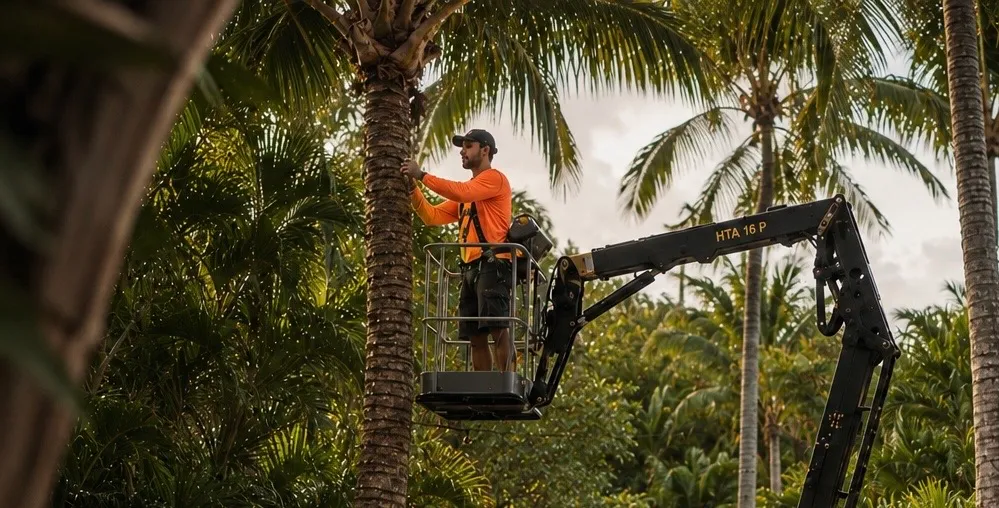
This is one reason seasonal maintenance can be valuable. Instead of the homeowner having to figure out how to safely reach a problem area, maintenance and troubleshooting can be handled as part of a professional service when that service is included in the agreement.
Don’t Forget the Takedown and Storage
The holiday season eventually ends, but the project is not finished when the lights are switched off.
Lights installed on tall palms still have to be removed, and the same access challenges that existed during installation can return during takedown.
Careful removal also matters. Pulling or handling lighting materials carelessly can damage the lights or other components and can potentially damage the palm’s trunk as well.
Once everything is down, the decorations need to be organized and stored for the rest of the year. Multiple palms can produce a substantial amount of lighting material, particularly when several trees have been decorated at different heights and densities.
It is also worth checking materials during takedown. Lights or connections that are damaged or no longer working may need to be replaced before the next holiday season rather than discovering the problem when installation begins again.
DIY or Professional Installation: Which Makes Sense?
There is no single answer for every palm tree.
DIY may be more manageable when the palm is relatively short, easily accessible, and the installation can be completed safely without difficult elevated access. The homeowner also needs to be comfortable handling the work themselves.
Professional installation may make more sense when:
- The palms are tall.
- Elevated access is required.
- There are multiple palms.
- The property is large.
- Suitable equipment is not available.
- Reaching the lights later for maintenance would be difficult.
- The homeowner wants installation and takedown handled for them.
These are not rigid rules. The goal is to look at the actual project rather than assuming that every palm tree requires the same approach.
What a Full-Service Lighting Company Can Handle
There is a difference between hiring someone to install lights and using a company that handles multiple parts of the seasonal lighting process.
Depending on the company and service agreement, a full-service approach may include:
- Professional installation
- Appropriate access and equipment
- Seasonal maintenance
- Troubleshooting and repairs
- Christmas light removal and takedown
- Storage, if offered as part of the service
The advantage is that the homeowner is not responsible for managing every stage of the project independently.
For homeowners considering professional installation, The Miami Lights’ Christmas lighting service can handle the different stages of your seasonal display, from installation and in-season support to post-holiday removal.
The exact scope of service depends on the project and agreement, so it is worth discussing what is included before the season begins.
Frequently Asked Questions
Can you put Christmas lights on a palm tree?
Yes, palm trees can be decorated with Christmas lights. The practical difficulty depends on the size and location of the palm, how accessible it is, and how much of the tree needs to be illuminated. A short, accessible palm can be a relatively simple project, while tall palms may require more planning and appropriate access.
How do you safely install Christmas lights on tall palm trees?
Tall palm lighting requires careful consideration of access and working conditions. Ladders or elevated equipment may be appropriate depending on the property and height, but homeowners should avoid improvising access methods. When a project requires working significantly above ground level or involves difficult access, using an experienced professional can be a more practical option.
How long does it take to wrap a palm tree with Christmas lights?
There is no standard installation time because palms vary considerably in height, size, accessibility, and desired lighting density. One accessible palm may require much less work than several tall palms spread across a larger property. The number of trees and amount of lighting material can also significantly affect the overall project.
Can palm tree Christmas lights stay up during bad weather?
Outdoor Christmas lights are exposed to weather throughout the season, including rain, wind, and humidity in South Florida. How an installation performs depends on factors such as the materials used and how it was installed. Weather does not necessarily mean an installation will fail, but it is one reason seasonal inspection and maintenance can be important.
Should I hire a professional to install Christmas lights on tall palms?
It depends on the project. A short, accessible palm may be manageable for a homeowner who is comfortable doing the work. Tall palms, multiple trees, difficult access, or projects requiring elevated equipment can be substantially more involved. Professional installation may make sense when the homeowner would rather not manage the access, installation, maintenance, and takedown themselves. If you are looking for a professional in South Florida, The Miami Lights may be a good fit for projects involving tall palms and larger displays.
Plan your installation
Ready to see how these ideas translate to your property? Schedule a complimentary consultation with our design team.
Contact usCall our studio
Prefer to speak right away? Our project coordinators are available Monday through Friday.
(954) 900-7362